By ATL Limo · Published · Updated
Wedding Limo planning guide
A vehicle with enough seats for one group may not have enough time to move several groups before a ceremony. Count both the passengers and the complete trip cycle before deciding that one vehicle can serve everyone.
Separate the couple’s ride from guest movements
List the couple, wedding party, close family and hotel guests separately. Their deadlines and destinations may differ. The couple may need a photo stop while guests need to reach the ceremony before seating begins.
One vehicle cannot be in two places at once. If it is reserved for photographs, do not also count it as available for hotel runs. Ask the planner which movements overlap and which can share a vehicle.
Our wedding transportation service covers the itinerary; the guest plan should make those overlapping needs explicit.
Calculate a complete trip cycle
For repeated hotel pickups, the cycle includes the return to the hotel after the first group is delivered. Leaving that empty return out can make an impossible plan look comfortable.
The figures below are a hypothetical scheduling example, not an Atlanta route estimate or ATL Limo operating promise. Replace every figure with the agreed plan for your venues.
| Part of one cycle | Illustrative allowance |
|---|---|
| Gather and board guests at hotel | 10 minutes |
| Drive to ceremony venue | 20 minutes |
| Unload and clear the entrance | 10 minutes |
| Return to hotel for the next group | 20 minutes |
| Complete cycle before next hotel loading | 60 minutes |
Check the last arrival, not just the first departure
Using that example, a first hotel pickup starting at 2 p.m. would finish unloading at the venue at 2:40 p.m. The vehicle returns to the hotel at 3 p.m.; the next group finishes unloading at 3:40 p.m. A 3:30 p.m. required arrival would therefore not work for the second group.
This is why a “20-minute drive” cannot be treated as a 20-minute repeating service. The planner must also allow for actual traffic, guest mobility, dresses, bags and the walk from drop-off to seating.
If the last arrival is too late, discuss an earlier start, fewer repeated runs, a different vehicle arrangement or a revised guest pickup plan. Confirm availability before announcing a solution to guests.
Treat venue entrances and photographs as booked details
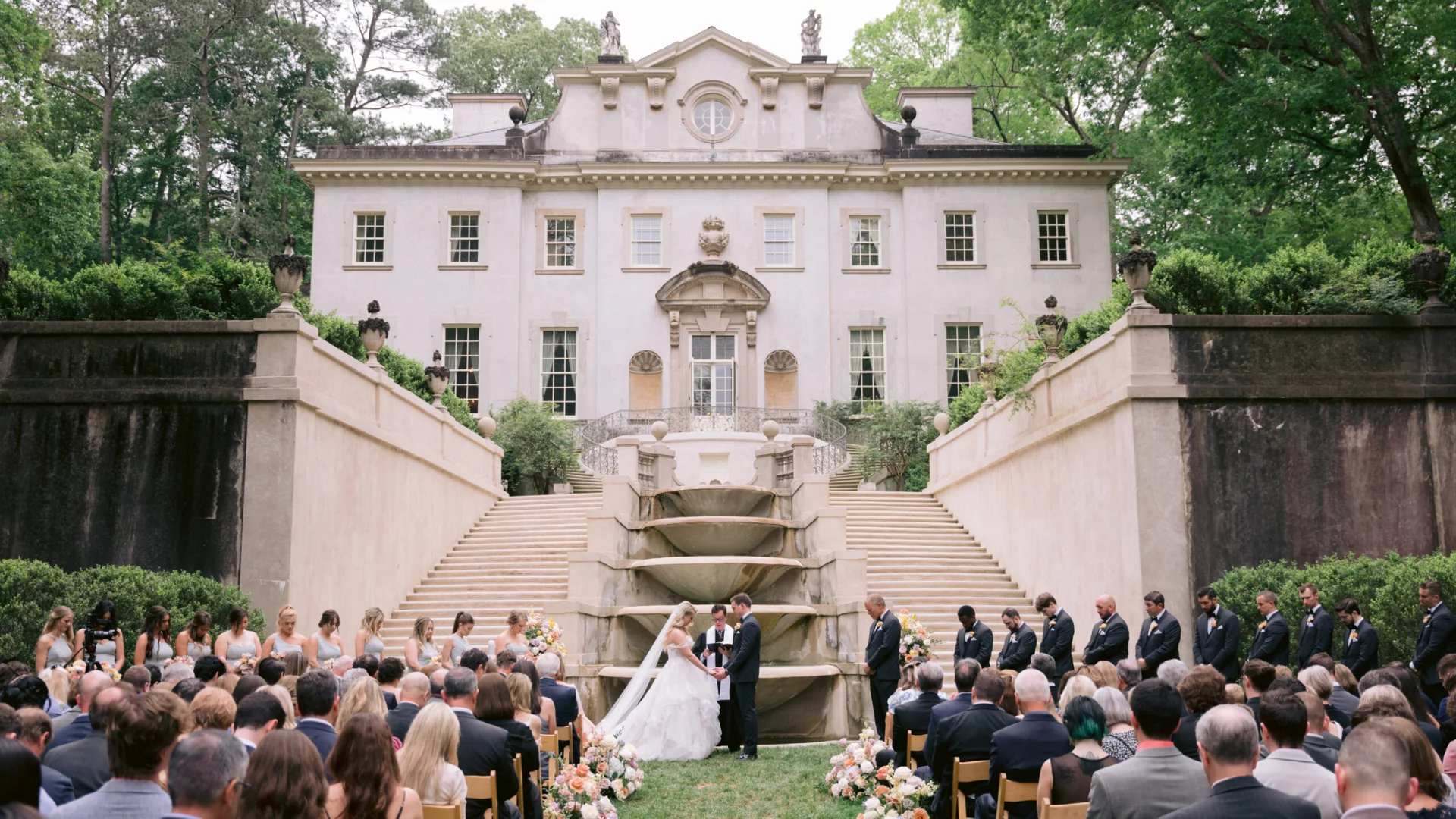
At a venue such as Swan House Gardens, use the event coordinator’s access and photo instructions. The Atlanta History Center provides official venue information, but a venue name is not permission for an unplanned photo stop or vehicle entrance. Couples using a different Midtown venue can follow the Atlanta Botanical Garden wedding transportation guide for its parking, transit and guest-arrival details. For Magnolia Hall, Greystone or Dockside, use the Piedmont Park wedding transportation guide to separate the garage address from the approved venue meeting point.
Ask where passengers may board, whether the car must leave after unloading and where it can wait. Give guests the agreed meeting point rather than a broad property address.
If the route includes a Buckhead hotel, a ceremony elsewhere and a separate reception, list each leg. Use a current estimate for each journey; do not reuse the morning estimate for an evening return.
Plan the last ride home and the price together
Decide whether guests have one return departure or several. An earlier option can help guests who do not want to stay until the reception ends, but it changes the transportation required.
Keep the couple’s final departure separate in the schedule. Name a contact who can confirm the group is ready without involving the couple in every call.
Ask for the full quote showing the reserved hours, repeated trips, waiting, parking and extension terms. A hypothetical shuttle cycle is a planning tool; it is not a guarantee that unlimited runs are included.
Check passenger numbers against the available fleet. ATL Limo lists a Sprinter up to 14 passengers, so a larger guest list requires a discussed plan rather than an assumed coach or bus.
Build the guest timetable before sharing pickup times
Use one row per departure, even when the same vehicle returns to the same hotel. Copy the table into a spreadsheet and replace every bracket. The coordinator and transport provider should check the finished sequence before guests receive it.
| Run and guest group | Pickup and boarding start | Unload complete by | Vehicle ready for next run |
|---|---|---|---|
| Hotel run 1: [people] | [Entrance / time] | [Venue entrance / time] | [Return plus repositioning] |
| Hotel run 2: [people] | [Entrance / time] | [Venue entrance / time] | [Next assignment / time] |
| Couple or wedding party | [Location / time] | [Photos or ceremony / time] | [Confirm any overlap] |
| Reception return: [people] | [Guest meeting point / time] | [Hotel / final drop-off] | [End of reserved service] |
For repeat runs, the next boarding start is the previous boarding start plus loading, driving, unloading and the empty return. Compare the final unloading time with the ceremony arrival deadline, then allow for the walk to seating. Record the guest coordinator’s phone beside the timetable.
If you are deciding whether to retain the vehicle between movements, compare hourly service and separate transfers. Use the quote comparison worksheet to check which repeated trips and waiting periods are included.
Get a quote for your wedding schedule
Send the hotel, ceremony and reception locations, group counts and required arrival times. Ask us to price the actual movements and return plan.
Related transportation options
Planning sources
Route conditions, venue access and pickup instructions can change. Confirm current details for the date of travel.